Witch Cauldron Beef Stew has quickly become one of my favorite recipes to make when the weather turns crisp and cozy evenings call for something hearty. The first time I made it, the aroma that filled my kitchen was intoxicating — the rich scent of seared beef mingling with caramelized onions, fresh thyme, and rosemary felt like pure comfort simmering on the stove.
As it bubbled away gently, I couldn’t help but lift the lid now and then just to take in that deep, savory fragrance.
What makes this Witch Cauldron Beef Stew so special is the way it transforms simple, humble ingredients into something extraordinary.
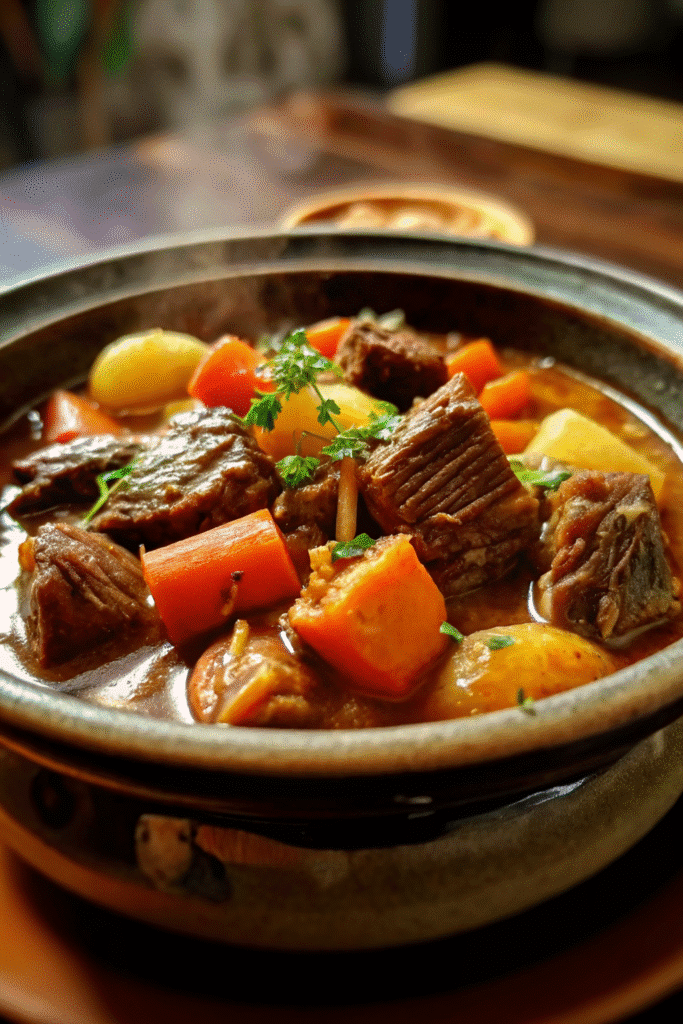
Each bite offers tender chunks of beef that practically melt in your mouth, surrounded by soft carrots and potatoes that have soaked up all the flavor of the broth.
The tomato paste adds just the right touch of richness, while the herbs bring a subtle, earthy warmth that makes you want to savor every spoonful.
Why Witch Cauldron Beef Stew is the Ideal Recipe
After making this Witch Cauldron Beef Stew more times than I can count, I can honestly say it’s the kind of recipe that never fails to comfort and impress.
What I love most about Witch Cauldron Beef Stew is how effortlessly it turns a handful of simple, familiar ingredients into something that tastes like it’s been simmering in an old countryside kitchen all day. There’s no need for fancy techniques — just patience, good ingredients, and a bit of love stirred in along the way.
This Witch Cauldron Beef Stew is ideal for busy days when you crave a home-cooked meal but don’t have the energy for complicated recipes. Once everything is in the pot, the stew practically takes care of itself.
The long, slow simmer does all the work — tenderizing the beef until it’s perfectly soft and infusing the vegetables with layers of flavor that develop gradually. By the time Witch Cauldron Beef Stew is ready, the broth has thickened into a rich, velvety sauce that clings beautifully to every spoonful.
Key Ingredients in Witch Cauldron Beef Stew Recipe
When I first started making Witch Cauldron Beef Stew, I quickly realized that what makes it so comforting isn’t just the way it’s cooked — it’s the thoughtful combination of ingredients. Each one plays a role in building layers of flavor that make the Witch Cauldron Beef Stew feel rich, hearty, and deeply satisfying. Here’s what goes into it and why every element matters.
Beef Stew Meat (2 lbs, cubed)
The star of the show. I like to use well-marbled cuts because they become irresistibly tender after slow simmering. As the stew cooks, the beef absorbs the broth’s flavors and practically melts apart with each bite.
Olive Oil (2 tbsp)
This simple ingredient lays the foundation for flavor. Browning the beef in olive oil first gives it that deep, savory crust that you can’t get any other way. It’s also what adds richness to the base of the stew.
Onion (1 large, chopped)
Onions are essential here. When sautéed, they release sweetness and depth that balance the heartiness of the beef. They also mingle beautifully with the garlic to create that cozy aroma that fills the kitchen.
Garlic (4 cloves, minced)
Garlic brings warmth and personality. It’s that subtle note you notice with every spoonful — not overpowering, just enough to enhance the other ingredients and make the stew truly inviting.
Carrots (3, sliced)
I love the way carrots soften and sweeten as they cook. They add color, texture, and a natural sweetness that complements the savory broth perfectly.
Potatoes (3, diced)
Potatoes are what make this stew feel rustic and hearty. They absorb the broth’s flavors and add that satisfying bite that makes every bowl filling and comforting.
Tomato Paste (1 tbsp)
Just a spoonful brings richness and a hint of tang that ties everything together. It deepens the color and gives the broth its velvety consistency.
Thyme (1 tsp) and Rosemary (1 tsp)
These herbs are what give this recipe its signature “cauldron” aroma — earthy, fragrant, and timeless. They add complexity without being overwhelming.
Bay Leaf (1)
It’s a small addition, but it quietly infuses the stew with a background note that rounds out the flavors. I always remove it before serving, but its presence during cooking makes a big difference.
Beef Broth (4 cups)
The heart of the stew. It brings everything together and gives the dish that deep, comforting flavor that feels like it’s been simmering for hours — even if it hasn’t.
Salt and Pepper (to taste)
Simple, but essential. Seasoning properly ensures that every ingredient shines. I always taste as it simmers and adjust as needed for balance.
Witch Cauldron Beef Stew
- Total Time: 2 hours 15 min
- Yield: 6 servings
Description
Ingredients
2 lbs beef stew meat, cubed
1 large onion, chopped
3 carrots, sliced
3 potatoes, diced
4 cloves garlic, minced
4 cups beef broth
1 tbsp tomato paste
1 tsp thyme
1 tsp rosemary
1 bay leaf
Salt and pepper to taste
2 tbsp olive oil
Instructions
Heat olive oil in a large pot over medium heat.
Add beef and brown on all sides. Remove and set aside.
In the same pot, sauté onions and garlic until soft.
Add carrots and potatoes, cook for 5 minutes.
Return beef to the pot. Stir in tomato paste, thyme, rosemary, and bay leaf.
Pour in beef broth. Bring to a boil, then reduce heat to low.
Simmer for 1.5 to 2 hours, until beef is tender.
Season with salt and pepper. Remove bay leaf before serving.
- Prep Time: 15 min
- Cook Time: 2 hours
- Category: Main Dish
- Method: Stovetop
- Cuisine: Homemade
If you enjoyed this Witch Cauldron Beef Stew recipe, you might also love my Leftover Turkey Sandwich for Thanksgiving, Christmas Brunch Casserole Recipe, Christmas Crack Recipe another cozy, seasonal favorite perfect for using what’s left after the holiday feast.
How to Make Witch Cauldron Beef Stew Recipe Step-by-Step
When I make this Witch Cauldron Beef Stew, I like to take my time and enjoy each part of the process — from the first sizzle of the beef to the final taste test before serving. The beauty of this Witch Cauldron Beef Stew recipe is in its simplicity, but also in how every step adds a layer of depth to the flavor. Here’s exactly how I prepare it in my kitchen.
Step 1: Heat the Olive Oil
I start by heating a couple of tablespoons of olive oil in a large, heavy-bottomed pot over medium heat. You’ll know it’s ready when it shimmers slightly. This step sets the tone for everything that follows — the oil helps create those rich, flavorful bits that form at the bottom of the pot, which later melt into the broth.
Step 2: Brown the Beef
Next, I add the beef cubes in batches, making sure not to overcrowd the pot. This allows each piece to brown properly instead of steaming. The sound of the meat sizzling and the aroma that fills the kitchen instantly tells you that something special is starting to happen. Once each batch has a deep brown crust, I transfer the beef to a plate and set it aside.
Step 3: Sauté the Onions and Garlic
In the same pot, I toss in the chopped onions and minced garlic. They start to soften and turn golden, releasing that familiar, cozy fragrance that always reminds me of family dinners. I take a wooden spoon and scrape up any browned bits left behind by the beef — those are pure flavor.
Step 4: Add the Carrots and Potatoes
Once the onions are tender, I add the sliced carrots and diced potatoes. I let them cook for about five minutes, stirring occasionally so they pick up a little color. This brief cooking step helps them hold their texture later and allows them to start absorbing the flavor base early.
Step 5: Bring Back the Beef and Add the Seasoning
I return the browned beef to the pot and stir in the tomato paste, thyme, rosemary, and the bay leaf. The tomato paste adds a deep, rich tone while the herbs bring that earthy, almost woodland scent that makes the stew feel so rustic.
Step 6: Pour in the Beef Broth
Next, I pour in the beef broth, watching as it loosens all the flavorful bits clinging to the pot. I give everything a good stir, bring it to a gentle boil, then reduce the heat to low. The moment it starts to simmer, the kitchen fills with an aroma that feels like pure comfort.
Step 7: Let It Simmer Slowly
This is my favorite part. I cover the pot partially and let it simmer for about an hour and a half to two hours. During that time, the beef becomes tender, the vegetables soften, and the broth transforms into a velvety, flavorful sauce. I like to give it an occasional stir, just to make sure everything is melding together beautifully.
Step 8: Taste and Adjust Seasoning
Once the stew looks rich and the beef feels fork-tender, I taste the broth and adjust the seasoning with salt and pepper. This step is personal — sometimes I add a touch more salt to balance the sweetness of the carrots, or an extra crack of black pepper for warmth.
Step 9: Serve and Enjoy
Before serving, I remove the bay leaf and give the stew one final stir. The result is a deep, hearty dish that feels like it’s been crafted with care. I love serving it with crusty bread or over a bed of creamy mashed potatoes. Each spoonful feels like a small reward for letting time and patience do their work.
What Makes This Witch Cauldron Beef Stew Special
What truly sets this Witch Cauldron Beef Stew apart is its balance of simplicity and depth. Every time I make Witch Cauldron Beef Stew, I’m reminded that comfort food doesn’t need to be complicated to feel extraordinary.
The slow simmering turns basic ingredients into something layered and rich — tender beef, vegetables that melt into the broth, and herbs that leave behind the faintest whisper of warmth.
Witch Cauldron Beef Stew is also the kind of dish that brings people closer. There’s something about ladling it straight from the pot that makes dinner feel more personal and comforting. The stew seems to gather everyone around, filling the air with the scent of home and the promise of a slow, satisfying meal.
Each time I make Witch Cauldron Beef Stew, I find it hard not to think of it as a little bit magical — proof that with patience, care, and a good pot, you can turn the simplest things into something unforgettable.
Witch Cauldron Beef Stew Nutrition Facts
| Nutrient | Amount per Serving | Notes |
|---|---|---|
| Calories | 385 kcal | A satisfying portion that provides lasting energy. |
| Protein | 33 g | From the tender beef, perfect for muscle repair and fullness. |
| Total Fat | 16 g | Mostly healthy fats from olive oil and beef marbling. |
| Saturated Fat | 5 g | Adds richness to the stew without going overboard. |
| Cholesterol | 95 mg | Comes naturally from the beef — moderate for a hearty meal. |
| Carbohydrates | 26 g | Balanced with the potatoes and carrots for gentle sweetness. |
| Fiber | 4 g | From the vegetables, helping keep the dish wholesome. |
| Sugars | 6 g | Naturally occurring from onions and carrots. |
| Sodium | 680 mg | Can be adjusted by using low-sodium broth if preferred. |
| Potassium | 950 mg | A healthy boost from the potatoes and carrots. |
| Iron | 4 mg | Naturally provided by the beef, supporting energy levels. |
FAQs about Witch Cauldron Beef Stew
What ingredients do you need for a Witch’s Cauldron Beef Stew?
To make this stew, you’ll need beef stew meat, olive oil, onions, garlic, carrots, potatoes, tomato paste, beef broth, thyme, rosemary, a bay leaf, and a good pinch of salt and pepper. What makes these ingredients special is how they transform when cooked slowly together — the beef becomes tender, the vegetables soften, and the herbs infuse the broth with earthy depth. I’ve found that sticking to fresh herbs and a quality broth really brings out the best in this recipe.
How to prepare beef stew the night before?
I often make this stew a day ahead, and honestly, it tastes even better the next day. To do this, I cook it fully, then let it cool before refrigerating overnight. The flavors deepen as it rests, and the broth thickens slightly, giving it that perfect, hearty consistency. When I reheat it the next day, I add a splash of broth or water to loosen it up, then warm it gently over low heat. It’s the kind of meal that rewards patience — just like any great stew should.
How to use the witch’s cauldron?
If you happen to have an actual cast iron cauldron or heavy Dutch oven, you’re in for a treat. Cooking in one adds a rustic charm and helps distribute heat evenly, which is perfect for slow-simmered dishes like this. I love using mine on cool evenings — it feels like stepping back in time. The key is to keep the heat gentle and steady, letting the stew bubble quietly until it reaches that magical tenderness.
What do you cook in a cauldron?
Beyond this Witch Cauldron Beef Stew, a cauldron is great for all sorts of hearty meals — think soups, chili, braised meats, and even mulled cider. Anything that benefits from slow cooking and rich flavor development will thrive in a cauldron. It’s a vessel meant for comfort food, for dishes that fill your home with warmth and a sense of old-fashioned coziness. I use mine most often in the fall and winter, when a slow-cooked meal just feels right.
Conclusion
Every time I make Witch Cauldron Beef Stew, I’m reminded why it’s such a comforting recipe. There’s something about watching the ingredients slowly come together — the beef tenderizing, the vegetables softening, and the broth turning rich and fragrant — that feels grounding and satisfying. It’s not just a meal; it’s a moment of calm in the middle of a busy day.
What I love most about Witch Cauldron Beef Stew is how it brings people together. Whether it’s shared at a family dinner or enjoyed quietly on a chilly evening, this stew never fails to warm both the body and the spirit.
It’s proof that with simple ingredients, a little time, and a bit of heart, you can create something truly special — a bowl of pure, homemade comfort.
Looking for inspiration? Visit Elise Chef on Pinterest to explore beautifully curated high-fiber recipes and discover your next healthy habit.