Making a Christmas Prime Rib Roast this year was one of those moments where the kitchen smells as good as the food tastes.
From the moment the garlic, rosemary, and thyme hit the sizzling olive oil, the aroma filled the house with a cozy, festive warmth that made everyone peek into the kitchen with anticipation.
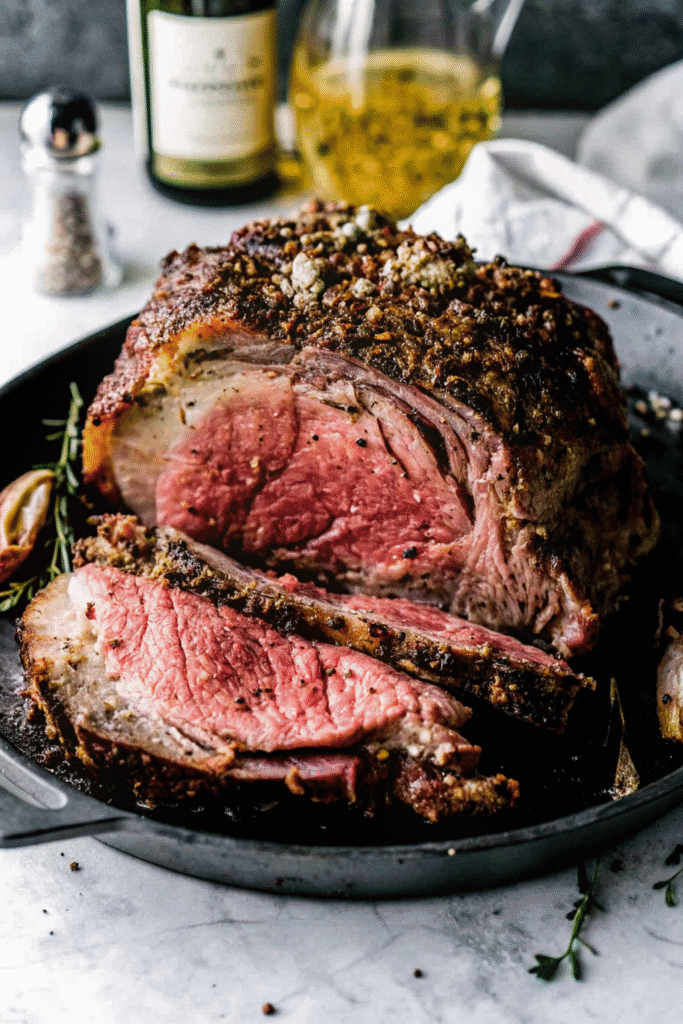
As I rubbed the seasoning into the marbled beef, I could already imagine the rich, juicy slices waiting to be served, each bite melting in the mouth with a perfect balance of savory flavor and tender texture.
There’s something special about Christmas Prime Rib Roast—it’s not just a meal; it’s an experience. The crackle of the oven, the deep, comforting smell of roasting beef, and the gentle sizzle as the meat rests make the process as rewarding as the feast itself.
And when Christmas Prime Rib Roast comes time to carve, that first cut reveals a rosy, succulent center that invites everyone to gather around and savor each slice.
Why Christmas Prime Rib Roast is the Ideal Recipe
When I first decided to make a Christmas Prime Rib Roast, I wasn’t just looking for a show-stopping main dish—I wanted something that felt celebratory, comforting, and worth gathering everyone around the table.
And let me tell you, nothing compares to the feeling of slicing into a perfectly roasted prime rib and seeing that rosy, juicy interior. It’s the kind of dish that instantly tells your guests, “This meal is special.”
One of the reasons I love this Christmas Prime Rib Roast recipe is how effortlessly it balances flavor and elegance. The combination of fresh rosemary, thyme, and garlic infuses the beef with a depth of flavor that is both aromatic and savory.
While Christmas Prime Rib Roast is cooking, the scent alone transforms the kitchen into a holiday haven, making it impossible not to sneak a taste of the drippings or admire the golden crust forming on the roast.
Key Ingredients in Christmas Prime Rib Roast Recipe
When I prepared this Christmas Prime Rib Roast, I realized that each ingredient plays a starring role, not just in flavor but in creating that memorable holiday experience.
Here’s a breakdown of the essential components I used and why they matter:
5 pounds beef prime rib – This is the heart of the dish. I’ve learned that the quality of the meat makes all the difference. A well-marbled prime rib creates a juicy, tender roast with a rich beefy flavor that really impresses everyone at the table. If your roast is larger, just remember to double the seasonings so every bite is as flavorful as the first.
Sea salt – I always use coarse sea salt because it helps form that beautiful, savory crust on the roast. Sprinkling it generously and letting it sit while the meat comes to room temperature makes the flavor penetrate more evenly.
Freshly ground black pepper (2 teaspoons) – Freshly ground pepper adds a subtle heat and depth. I grind it myself because pre-ground pepper just doesn’t release the same aromatic flavor while roasting.
Fresh rosemary (2 teaspoons) – Rosemary has that classic piney, festive aroma that fills the kitchen. I like to crush it slightly between my fingers to release the oils before rubbing it onto the meat—it makes the roast smell irresistible.
Fresh thyme (1 teaspoon) – Thyme is delicate but adds an earthy layer that complements the richness of the beef. Combined with rosemary, it creates that signature herbaceous flavor that makes this roast unmistakably holiday-worthy.
Garlic (8 cloves, minced) – Garlic is the magic touch. When it roasts with the beef, it becomes sweet, mellow, and fragrant. I always mince it fresh because it gives the meat a bright, aromatic kick that jarred garlic can’t match.
Olive oil (1/4 cup) – I use olive oil to help the seasonings adhere to the meat and to assist in forming that gorgeous browned crust. It also adds a hint of richness that enhances the roast’s natural flavors.
Horseradish (optional, for serving) – While it’s optional, I can’t imagine serving prime rib without a little horseradish on the side. The sharp, tangy flavor cuts through the richness of the meat and adds a little festive flair to each slice.
PrintChristmas Prime Rib Roast
- Total Time: 1 hour 35 min
- Yield: Serves 8
Description
Christmas Prime Rib Roast features a tender, juicy beef rib seasoned with garlic, fresh rosemary, thyme, black pepper, and olive oil. Perfectly roasted, it creates a flavorful, aromatic, and festive centerpiece for your holiday dinner table.
Ingredients
5 pounds beef prime rib* (if larger, double the spices/seasonings)
Sea salt
2 teaspoons freshly ground black pepper
2 teaspoons fresh rosemary
1 teaspoon fresh thyme
8 cloves garlic , minced
1/4 cup olive oil
horseradish , for serving (optional)
Instructions
Bring meat to room temperature: Remove prime rib from the refrigerator one hour before cooking. Season it on all sides with salt and cover it loosely with plastic wrap as it comes to room temperature. Prime rib roast will cook better and more evenly when it’s at room temperature.
Adjust oven racks: When you are ready to cook the prime rib, lower/adjust your oven rack so the meat will cook in the center of the oven. Preheat the oven to 500 degrees F.
Combine seasonings: In the meantime, mix together 1 ½ teaspoons salt, pepper, rosemary, thyme, garlic, and olive oil.
Prepare roast: Pat the roast with paper towels. Spoon seasoning over it, rubbing it onto all sides. Place bone-in roast with the bones down, inside a roasting cast iron pan. Place a boneless roast on a rack inside the pan.
Bake prime rib at 500 degrees for 15 minutes, then reduce the oven temperature to 325 degrees and continue baking until desired level of doneness. Use a meat thermometer to check the temperature of the meat:Rare: 120 degrees F (about 10-12 min/pound).Medium Rare: 130 degrees F (about 13-14 min/pound)Medium: 140 degrees F (about 14-15 min/pound)Medium Well:150 degrees FImportant: The meat will continue to cook as it rests out of the oven so remove it from the oven 5-10 degrees before it reaches your optimal temperature.)
Rest: Remove it from the oven and tent it with foil. Allow it to rest for 30 minutes before carving.
Carve prime rib roast by slicing against the grain into about ½ inch thick slices. Serve with horseradish, if desired.
- Prep Time: 20 min
- Cook Time: 1 hour 15 min
- Category: Main Dish
- Method: Roasting
- Cuisine: Christmas
How to Christmas Prime Rib Roast Recipe Step-by-Step
Making a Christmas Prime Rib Roast might sound intimidating, but I promise it’s manageable—and honestly, Christmas Prime Rib Roast is one of the most rewarding dishes to prepare.
Here’s how I approach Christmas Prime Rib Roast, step by step, and the little tricks I’ve learned along the way:
Bring meat to room temperature – I always take the prime rib out of the refrigerator about an hour before cooking. Letting it sit uncovered or loosely wrapped allows it to come to room temperature, which ensures it cooks more evenly. While waiting, I usually take a deep breath of that beefy aroma and feel the excitement build—it’s a little ritual that signals the start of the feast.
Adjust oven racks – Before I preheat the oven, I lower or adjust the rack so the roast will sit in the center. Preheating to 500 degrees F gives the roast a powerful start, forming a beautiful crust while locking in juices. I love this part because the sizzling sound when it first goes in is so satisfying.
Combine seasonings – While the oven warms up, I mix 1 ½ teaspoons of salt, pepper, rosemary, thyme, minced garlic, and olive oil. The scent is intoxicating, and I usually taste a tiny bit to make sure it’s perfectly balanced. This seasoning mixture is what turns a simple cut of beef into something magical.
Prepare the roast – I pat the meat dry with paper towels—it helps the seasonings stick and ensures a crisp crust. Then I rub the herb and garlic mixture all over the roast, making sure every nook and cranny is coated. For a bone-in roast, I place it bones-down in a cast iron pan; for boneless, I set it on a rack. At this stage, I often pause to admire how ready it looks, knowing the oven will do the rest.
Bake at high heat first – I pop the roast in at 500 degrees F for 15 minutes. This step gives it a beautiful, caramelized exterior. The aroma in the kitchen at this point is heavenly—almost irresistible, and my family is usually hovering nearby, curious about the final result.
Reduce oven temperature – After the initial sear, I lower the oven to 325 degrees F and continue baking. I always use a meat thermometer to monitor doneness:
- Rare: 120 degrees F (about 10–12 minutes per pound)
- Medium Rare: 130 degrees F (about 13–14 minutes per pound)
- Medium: 140 degrees F (about 14–15 minutes per pound)
- Medium Well: 150 degrees F
Rest the roast – Once out of the oven, I tent it loosely with foil and let it rest for 30 minutes. This is crucial. I’ve learned the hard way that skipping this step results in juices running everywhere when you cut into it. During this time, I usually start prepping sides or just savor the aroma in the kitchen—it’s like the roast is teasing you, promising incredible flavor.
Carve and serve – I slice against the grain into roughly ½-inch thick pieces. The first slice is always the most satisfying—I admire the rosy center and the perfect crust. I serve it with a little horseradish on the side, letting everyone customize their plate. That first bite is pure holiday bliss, and I can honestly say it feels worth every minute of preparation.
What Makes This Christmas Prime Rib Roast Special
What makes this Christmas Prime Rib Roast truly special is how it brings together simple, fresh ingredients into something extraordinary.
As I cooked Christmas Prime Rib Roast, the garlic and herbs infused the meat with layers of flavor that felt both festive and comforting.
The crust turned golden and crisp, while the inside remained tender and juicy—each slice was like a little celebration on the plate.
Christmas Prime Rib Roast is the kind of dish that doesn’t just satisfy hunger—it creates a moment. The aroma fills the home, the first slice feels like a reward, and the rich, savory taste lingers in memory long after the meal ends.
For me, it’s the centerpiece that turns any Christmas dinner into something unforgettable.
Christmas Prime Rib Roast Nutrition Facts
| Nutrient | Amount per Serving | Notes |
|---|---|---|
| Calories | 520 kcal | Rich in protein and fat, perfect for a festive meal |
| Protein | 45 g | Helps keep you full and satisfied |
| Total Fat | 35 g | Includes marbled beef fat and olive oil used in seasoning |
| Saturated Fat | 14 g | Moderate, contributes to flavor and juiciness |
| Cholesterol | 145 mg | Typical for a beef roast |
| Carbohydrates | 2 g | Very low, mainly from herbs and garlic |
| Fiber | 0.5 g | From fresh herbs |
| Sodium | 560 mg | Includes added sea salt; adjust to taste |
| Sugars | 0.5 g | Naturally occurring in garlic and herbs |
| Vitamin A | 2% DV | From herbs |
| Iron | 25% DV | Excellent source, great for holiday meals |
FAQs about Christmas Prime Rib Roast
Is prime rib good for Christmas dinner?
Absolutely. I’ve found that a Christmas Prime Rib Roast instantly elevates the holiday table. The rich, juicy flavor and the beautiful presentation make it feel like a celebration on every plate. There’s something about the aroma of herbs and roasting beef that fills the home with warmth and makes the meal feel extra special. Every year, I notice how everyone naturally gathers around when it’s ready to carve—it just has that festive magic.
What is the most important thing to do before roasting a prime rib roast?
For me, the key step is letting the meat come to room temperature. I’ve made the mistake of putting a cold roast straight in the oven once, and the cooking was uneven. Giving it about an hour to warm up allows it to cook consistently and helps the seasoning penetrate, giving each slice full flavor from edge to center. It also makes carving easier and ensures juicy results.
What is the 500 rule for prime rib roast?
I like to think of the “500 rule” as the secret to a perfect crust. It means starting your roast in a 500-degree oven for about 15 minutes before reducing the heat. I love this step because it locks in the juices and creates that golden, flavorful crust everyone notices first. That first sizzling smell when it goes in is enough to make anyone impatient for the meal.
What is the secret of cooking a prime rib roast?
Honestly, the secret is attention to detail and letting the meat rest. Seasoning it generously, cooking it carefully with temperature in mind, and resting it for 30 minutes before carving makes all the difference. I always remind myself not to rush this part—waiting is hard, but it rewards you with tender, juicy slices every time. The rest allows the juices to redistribute, and that’s what gives each bite that melt-in-your-mouth texture I love.
Conclusion
Making this Christmas Prime Rib Roast always feels like a little holiday ritual in my kitchen. From seasoning the meat to that first golden slice pulled from the oven, Christmas Prime Rib Roast is a dish that fills the home with warmth and the table with celebration.
Every bite of Christmas Prime Rib Roast carries the rich, tender flavor and festive aroma that make Christmas dinner feel truly special.
If you want to complete your holiday feast, pairing it with our Christmas Ham Glaze Recipe, indulging in Pumpkin Cookies, or serving a hearty Witch Cauldron Beef Stew brings even more joy to the table. Cooking this roast isn’t just about the food—it’s about creating moments that everyone remembers and savoring the magic of the season together.
Looking for inspiration? Visit Elise Chef on Pinterest to explore beautifully curated high-fiber recipes and discover your next healthy habit.