Roasted Root Vegetables have a special place in my kitchen—especially on those chilly evenings when the oven’s gentle heat fills the house with the earthy aroma of caramelizing beets, sweet yams, and rosemary.
I made this Roasted Root Vegetables recipe just last weekend, and I have to say, it reminded me why I love slow, simple cooking that brings out the best in everyday ingredients.
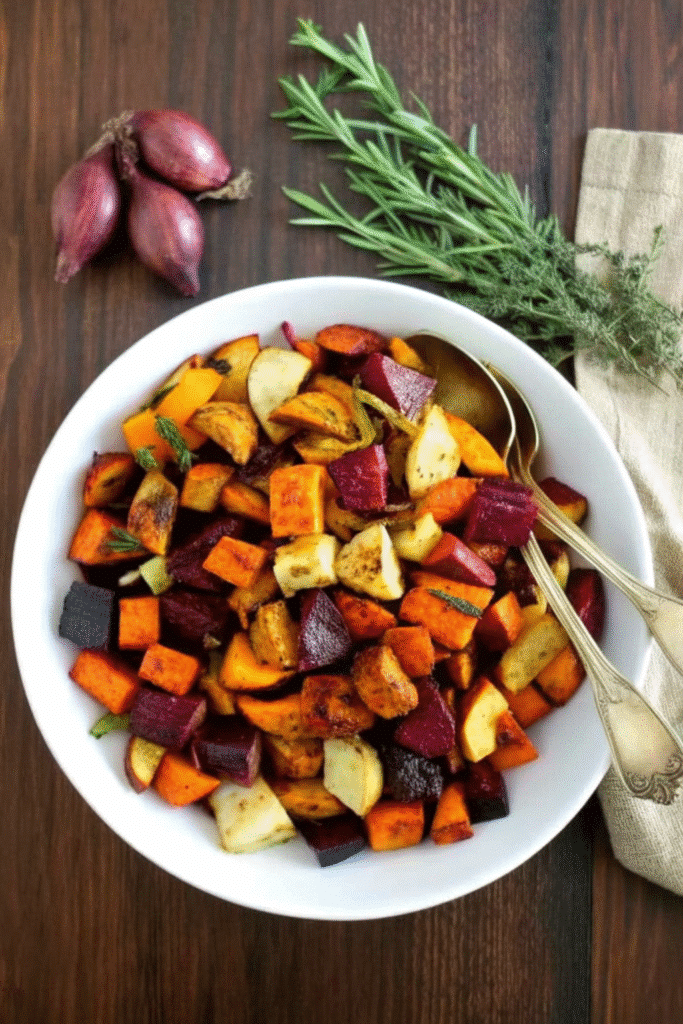
As the vegetables roasted, the air filled with a cozy blend of sweetness and herbs, and the golden edges promised that perfect bite of crisp and tender perfection.
What I adore most about this Roasted Root Vegetables recipe is its balance—each vegetable brings something unique to the table. The yams offer a subtle sweetness, the beets lend a deep earthiness, and the carrots and parsnips add a gentle spice that makes every forkful interesting.
Even the red onion and garlic mellow beautifully in the oven, creating layers of flavor that feel both comforting and sophisticated.
Why Roasted Root Vegetables Is the Ideal Recipe
After making this Roasted Root Vegetables more times than I can count, I’ve come to realize that Roasted Root Vegetables are the kind of recipe that quietly steals the spotlight.
There’s something incredibly satisfying about the process—simple ingredients, minimal prep, and an outcome that tastes like you spent hours in the kitchen.
The magic lies in how roasting transforms humble roots into something rich and deeply flavorful.
When I pull the baking sheet from the oven, I’m always struck by the colors—amber yams, golden carrots, crimson beets, and hints of caramelized onion nestled between sprigs of rosemary.
It’s as if the entire essence of fall has been captured in one pan. The aroma is warm and grounding, the kind that makes everyone wander into the kitchen asking when dinner will be ready.
Key Ingredients in Roasted Root Vegetables Recipe
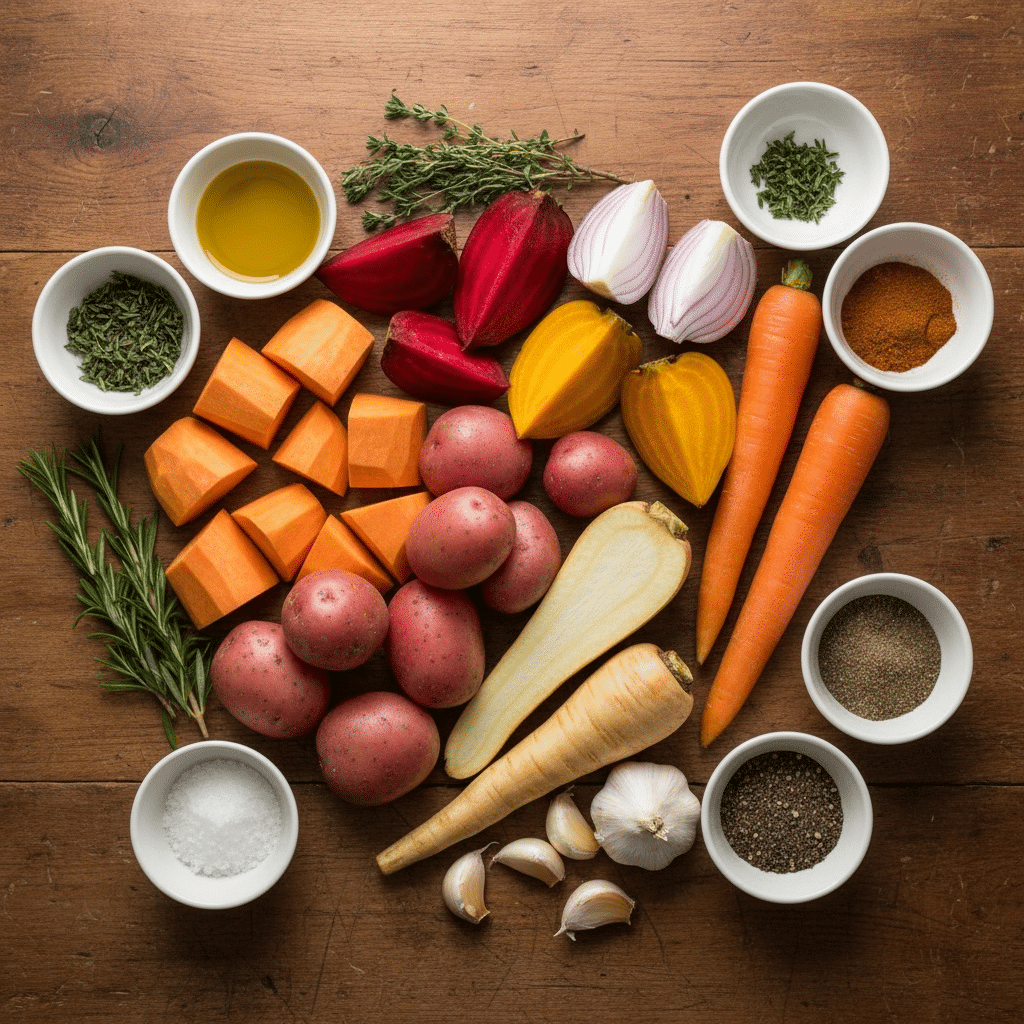
When I made this batch of Roasted Root Vegetables, I was reminded how every ingredient plays a part in building that deep, comforting flavor. Nothing fancy—just real, wholesome vegetables and a few kitchen staples that come together beautifully.
Here’s what I used and why each one matters.
Yams (orange sweet potatoes): These are the heart of the dish. Their natural sweetness caramelizes beautifully in the oven, giving every bite that perfect contrast of crisp and tender. I like to peel them before roasting for a smoother texture.
Red potatoes: With their skins left on, they add a wonderful rustic feel. The edges turn golden and crisp, while the centers stay soft and buttery. They help balance the sweetness of the yams with their mild, earthy flavor.
Beets (red or golden): I’ve tried both, and they each bring their own magic. Red beets add color and depth, while golden beets offer a subtle sweetness. They roast into little gems that add a lovely earthy undertone to the mix.
Carrots: Carrots become sweet and slightly nutty once roasted. I like to cut them into even pieces so they cook evenly with the other vegetables. When they catch a little color on the edges, that’s when they taste their best.
Parsnip: This one might surprise you if you don’t use it often. Parsnips have a gentle spiciness, almost like a hint of nutmeg, that gives the dish a layer of complexity. It’s one of those ingredients that makes people stop and ask, “What’s that flavor?”
Red onion: I always add half a red onion for its subtle sweetness. It melts down in the oven, softening into silky layers that blend right in with the rest of the vegetables.
Garlic cloves: Whole garlic cloves might sound bold, but roasting turns them mellow and buttery. They add just enough depth without overpowering the dish.
Olive oil: Good-quality extra virgin olive oil ties everything together. It helps the vegetables roast evenly and gives them that beautiful, golden sheen. I divide it up—some for tossing, some for brushing on the baking sheet.
Fresh thyme: Thyme brings brightness and balance. I love using fresh leaves when I can because their aroma fills the kitchen the moment they hit the heat.
Fresh rosemary: This is the scent that makes people hungry before dinner’s even ready. A few sprigs laid on top of the vegetables infuse everything with that warm, woodsy note that defines roasted dishes.
Ground cumin: Just a touch adds depth and warmth. It’s subtle, but it rounds out the flavors in a way that makes the dish feel complete.
Kosher salt and black pepper: These two do the quiet work—enhancing every flavor without stealing the show. I always taste and adjust at the end to make sure everything pops.
Roasted Root Vegetables Recipe
- Total Time: 55 min
- Yield: 4–6 servings
Description
Roasted Root Vegetables are a hearty, flavorful side dish featuring yams, red potatoes, beets, carrots, and parsnips, tossed with olive oil, garlic, thyme, and rosemary, then oven-roasted to achieve tender centers and caramelized, golden edges.
Ingredients
1 pound yams (orange sweet potatoes) – 2 small or one large, peeled
3/4 pound red potatoes scrubbed clean, peel on
1/2 pound beets (red or golden), trimmed and scrubbed clean
1/2 pound large carrots peeled and halved lengthwise
1 parsnip medium sized (4-5 oz), peeled and halved lengthwise
1/2 red onion peeled
6 whole garlic cloves large sized
1/4 cup extra virgin olive oil divided
2 tablespoons fresh thyme leaves (or 2 tsp dried thyme)
5 sprigs fresh rosemary (or 3 tsp dried rosemary)
1 teaspoon ground cumin (can be omitted for Ashkenazi Passover)
1 teaspoon kosher salt or more to taste
1/4 teaspoon black pepper or more to taste
Instructions
-
Preheat the oven and set the stage: I started by preheating my oven to 400°F (200°C) and moving the rack to the lower third of the oven. This helps the vegetables brown beautifully. As the oven warmed up, I could already imagine the smell of herbs and caramelized edges filling the room.
-
Prep the vegetables: I peeled the yams, carrots, and parsnip, then scrubbed the red potatoes and beets. Cutting everything into similar-sized chunks—about one and a half inches wide—makes a big difference. It ensures they roast evenly, so no piece ends up undercooked or burnt. I like that bit of mindfulness in the process; it’s not just chopping, it’s creating harmony on the pan.
-
Toss with olive oil and seasonings: Once everything was chopped, I tossed the vegetables and garlic cloves into a large bowl. I drizzled in most of the olive oil, saving a bit for the baking sheet, and sprinkled in the thyme, cumin, salt, and black pepper. Stirring the mix felt almost therapeutic—the vegetables glistening under the oil, herbs clinging to their surfaces, ready for the oven’s magic.
-
Prepare the baking sheet: I brushed the remaining olive oil over a large rimmed baking sheet, making sure every corner had a light coat. This little step ensures nothing sticks and adds an extra layer of crispness to the bottom of the vegetables. Then I spread the seasoned vegetables out evenly, giving them plenty of room. Overcrowding is the enemy of roasting—space lets them brown instead of steam.
-
Add the rosemary and roast: I laid a few sprigs of fresh rosemary right on top. Within minutes of going into the oven, the rosemary started releasing its aroma, and soon the kitchen smelled like comfort. I roasted everything for about 15 minutes before giving the tray a good stir—pulling the edges to the center and moving the center pieces out. This helps them cook evenly and develop that deep golden color.
-
Finish roasting: I returned the tray to the oven for another 20 minutes or so, checking occasionally. The best way to know they’re done? A fork slides easily through the biggest chunks, and the edges are crisp and slightly darkened. Each time I opened the oven door, the scent was irresistible—sweet, savory, and herbal all at once.
-
Final touches: After taking the tray out, I removed the rosemary sprigs and gave everything a gentle stir. A few rosemary leaves stayed behind, which I love. I tasted one piece, then another—adding just a pinch more salt and pepper. They were perfect: caramelized outside, tender inside, and full of flavor.
- Prep Time: 15 min
- Cook Time: 40 min
- Category: Main Dish
- Method: Roasting
- Cuisine: Christmas
These Roasted Root Vegetables pair perfectly with a Christmas Prime Rib Roast, a Christmas Ham Glaze Recipe, or a sweet Pumpkin Cookies Recipe to complete the meal.
How to Roasted Root Vegetables Recipe Step-by-Step
Making Roasted Root Vegetables always feels like a small act of self-care. There’s something meditative about the rhythm—peel, chop, toss, roast—and by the time the tray comes out of the oven, the kitchen feels warmer, cozier, and somehow calmer.
Here’s exactly how I prepared Roasted Root Vegetables, step by step.
Preheat the oven and set the stage: I started by preheating my oven to 400°F (200°C) and moving the rack to the lower third of the oven. This helps the vegetables brown beautifully. As the oven warmed up, I could already imagine the smell of herbs and caramelized edges filling the room.
Prep the vegetables: I peeled the yams, carrots, and parsnip, then scrubbed the red potatoes and beets. Cutting everything into similar-sized chunks—about one and a half inches wide—makes a big difference. It ensures they roast evenly, so no piece ends up undercooked or burnt. I like that bit of mindfulness in the process; it’s not just chopping, it’s creating harmony on the pan.
Toss with olive oil and seasonings: Once everything was chopped, I tossed the vegetables and garlic cloves into a large bowl. I drizzled in most of the olive oil, saving a bit for the baking sheet, and sprinkled in the thyme, cumin, salt, and black pepper. Stirring the mix felt almost therapeutic—the vegetables glistening under the oil, herbs clinging to their surfaces, ready for the oven’s magic.
Prepare the baking sheet: I brushed the remaining olive oil over a large rimmed baking sheet, making sure every corner had a light coat. This little step ensures nothing sticks and adds an extra layer of crispness to the bottom of the vegetables. Then I spread the seasoned vegetables out evenly, giving them plenty of room. Overcrowding is the enemy of roasting—space lets them brown instead of steam.
Add the rosemary and roast: I laid a few sprigs of fresh rosemary right on top. Within minutes of going into the oven, the rosemary started releasing its aroma, and soon the kitchen smelled like comfort. I roasted everything for about 15 minutes before giving the tray a good stir—pulling the edges to the center and moving the center pieces out. This helps them cook evenly and develop that deep golden color.
Finish roasting: I returned the tray to the oven for another 20 minutes or so, checking occasionally. The best way to know they’re done? A fork slides easily through the biggest chunks, and the edges are crisp and slightly darkened. Each time I opened the oven door, the scent was irresistible—sweet, savory, and herbal all at once.
Final touches: After taking the tray out, I removed the rosemary sprigs and gave everything a gentle stir. A few rosemary leaves stayed behind, which I love. I tasted one piece, then another—adding just a pinch more salt and pepper. They were perfect: caramelized outside, tender inside, and full of flavor.
What Makes This Roasted Root Vegetables Special
What sets this Roasted Root Vegetables recipe apart is how effortlessly it brings out the best in each ingredient. When I made it, I realized Roasted Root Vegetables wasn’t just about roasting vegetables—it was about creating harmony on a single sheet pan.
The sweetness of the yams, the earthy richness of the beets, and the hint of rosemary all come together in perfect balance.
What I love most about Roasted Root Vegetables is that it tastes like comfort but looks like something you’d serve for a special occasion. The colors are stunning, and the aroma makes Roasted Root Vegetables impossible not to sneak a bite before serving. It’s a recipe that feels rustic yet refined—simple to make, but full of flavor and warmth.
Roasted Root Vegetables is the kind of dish that reminds you that real cooking doesn’t have to be complicated; it just has to be done with care.
Roasted Root Vegetables Nutrition Facts
| Nutrient | Amount (Per Serving) | Details / Benefits |
|---|---|---|
| Calories | ~180 kcal | A balanced amount for a hearty side dish. |
| Carbohydrates | 28 g | Natural carbs from root veggies provide steady energy. |
| Protein | 3 g | A small but beneficial source of plant-based protein. |
| Fat | 7 g | Healthy fats from olive oil that support heart health. |
| Fiber | 5 g | Promotes digestion and keeps you full longer. |
| Sugars | 7 g | Naturally occurring sugars from yams, beets, and carrots. |
| Vitamin A | 180% DV | Excellent for eye health and immune support. |
| Vitamin C | 25% DV | Boosts immunity and helps absorb iron. |
| Potassium | 700 mg | Supports hydration and muscle function. |
| Iron | 6% DV | Contributes to energy and healthy red blood cells. |
FAQs about Roasted Root Vegetables
What root vegetables can be roasted together?
Almost any root vegetable works well together as long as you cut them into similar sizes so they cook evenly. I often use a mix of yams, red potatoes, carrots, beets, and parsnips because they balance sweetness and earthiness beautifully. You can also throw in turnips, rutabaga, or even radishes if you have them. The key is to give them enough space on the baking sheet so they roast, not steam.
What seasoning is good for roasting root vegetables?
For me, the magic is in simplicity. Olive oil, salt, and pepper are essential. From there, I love to add thyme and rosemary for that fresh, woodsy aroma. A touch of cumin brings warmth without overpowering the natural sweetness of the vegetables. Sometimes I’ll sprinkle a bit of smoked paprika or drizzle a little honey after roasting for a hint of depth—it all depends on the mood of the meal.
At what temperature should I roast root vegetables?
I’ve found that 400°F (200°C) is the sweet spot. It’s hot enough to caramelize the edges while keeping the centers soft and tender. Anything lower, and the vegetables can turn mushy; anything higher, and they might burn before they cook through. I like to roast them in the lower third of the oven to ensure even heat and rich color.
What are some common mistakes when roasting roots?
The most common mistake is crowding the pan. When vegetables are too close together, they steam instead of roasting, and you lose that golden crispness. Another issue is skipping the toss halfway through cooking—this simple step helps them brown evenly. Also, using too little oil can make them dry. I always make sure every piece has a light, glossy coating before they go in the oven. And finally, patience matters—resist the urge to pull them out too early. Those last few minutes in the oven are when the real caramelization happens.
Conclusion
Making this batch of Roasted Root Vegetables reminded me why I keep returning to simple, comforting recipes. The process—chopping, tossing, roasting—feels grounding, and the result is always a tray of warmth, color, and flavor that’s hard not to dive into immediately.
What I love most about Roasted Root Vegetables is how versatile this dish is. It pairs beautifully with a Christmas Prime Rib Roast, a Christmas Ham Glaze Recipe, or even just a cozy weeknight dinner. Each bite is a little celebration of natural sweetness, earthy richness, and fragrant herbs.
Looking for inspiration? Visit Elise Chef on Pinterest to explore beautifully curated high-fiber recipes and discover your next healthy habit.